
Visual merchandising isn’t one-size-fits-all—what sells fashion won’t necessarily sell food or electronics. Each retail category demands unique merchandising approaches that align with how customers interact with products, make purchasing decisions, and experience the brand. Understanding these differences is crucial for Indonesian retailers looking to maximize their visual merchandising investment and create spaces that truly convert.
With physical stores generating over $702 billion worldwide compared to $603 billion from e-commerce [1], brick-and-mortar retail remains vital. However, success depends on creating product displays that match each category’s specific requirements. Let’s explore how visual merchandising strategies differ across fashion, F&B, and electronics retail, and what Indonesian business owners should implement in each sector.
The Core Purpose: Operations vs. Storytelling vs. Functionality
The fundamental difference between visual merchandising across retail categories lies in its primary purpose. In retail, visual merchandising focuses on operations and driving sales outcomes through effective product displays [2]. However, the emphasis shifts dramatically depending on what you’re selling—fashion prioritizes emotional connection, F&B centers on sensory experience, while electronics demands functional demonstration spaces.
Fashion visual merchandising creates aspirational narratives that help customers envision themselves wearing products [3]. Mannequins become storytellers, styled to showcase complete looks rather than individual items. The goal is lifestyle projection—customers don’t just buy clothing; they buy the identity, confidence, and social perception those garments represent. Indonesian fashion retailers from Cotton Ink to small boutiques in Bandung succeed when displays make customers imagine themselves looking stylish, professional, or trendy in featured outfits.
F&B visual merchandising operates differently, prioritizing storytelling and creating emotional connections through sensory engagement [2]. Food displays must trigger appetite, suggest freshness, and communicate quality instantly. Unlike fashion where customers can try on items, food purchases often rely entirely on visual appeal and perceived quality from displays. Indonesian café owners and restaurant operators know that beautifully arranged pastries in display cases or artfully presented specialty coffee equipment drives purchases more effectively than simple product placement on shelves.
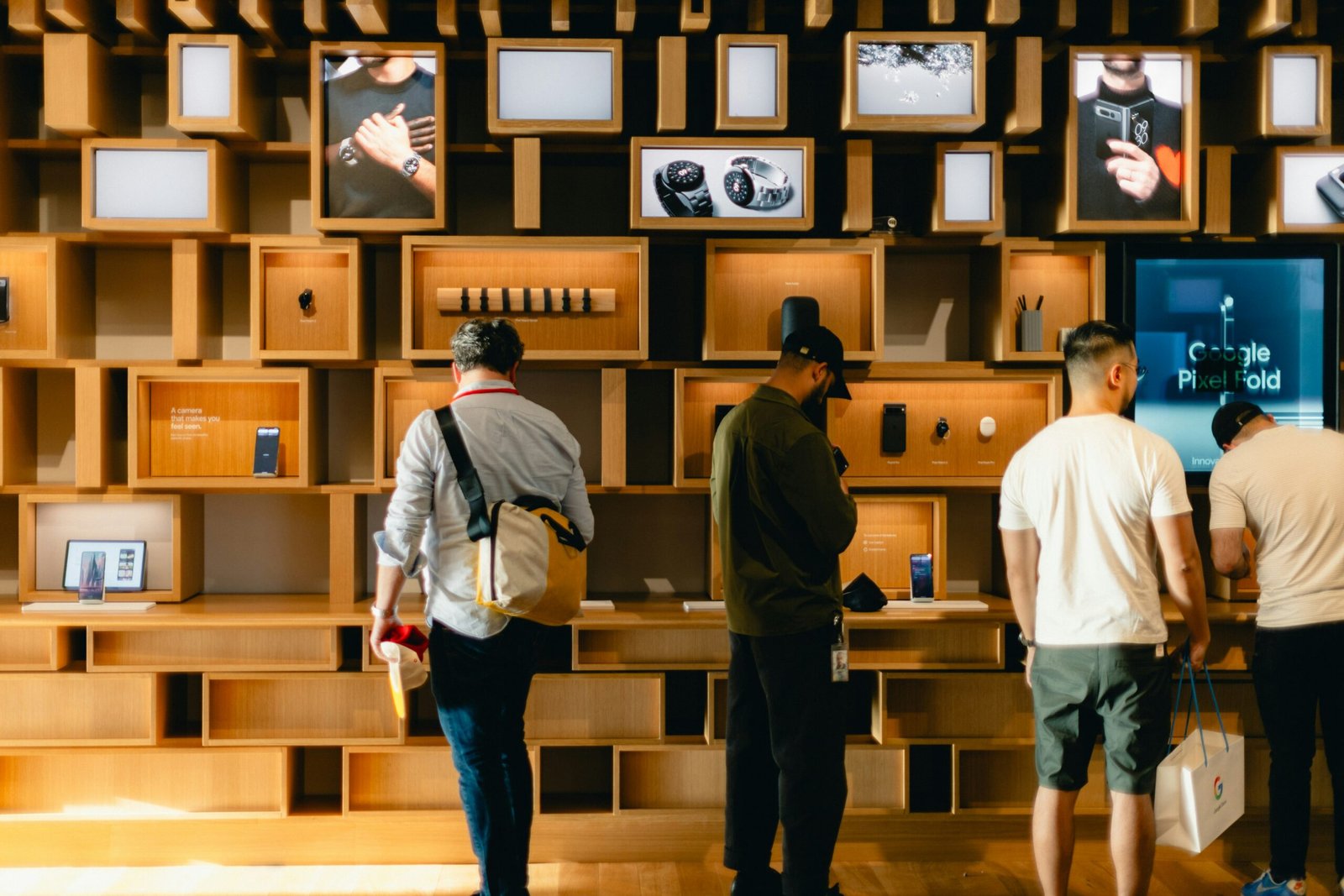
Electronics visual merchandising emphasizes functionality, product education, and technology demonstration [4]. Customers need to understand features, compare specifications, and test products before purchasing. Display strategies must accommodate device interaction while protecting expensive inventory, balancing accessibility with security. Indonesian electronics retailers from Jakarta’s Mangga Dua to regional stores succeed when customers can experience technology hands-on through working demonstration units and clear product information.
Fashion Retail: Creating Lifestyle Narratives Through Mannequins and Color
Fashion visual merchandising relies heavily on mannequins to create complete styling narratives that inspire customer purchases [5]. Effective mannequin styling requires meticulous attention to detail, creative outfit coordination, and strategic portrayal of seasonal relevance [6]. Indonesian fashion retailers should dress mannequins with complete outfits including accessories, demonstrating how pieces work together rather than displaying single items in isolation. This approach encourages higher transaction values as customers purchase coordinated looks instead of individual pieces.
Color coordination plays a strategic role in fashion merchandising, but the approach differs from simple color-blocking. While arranging all items by color creates visual impact, it actually reduces cross-selling opportunities [7]. Customers rarely dress in monochromatic outfits—they combine colors. Indonesian boutiques should arrange complementary colors together: place neutral items (white blouses, beige tops, black accessories) near colorful statement pieces (green skirts, patterned dresses) to encourage customers to envision complete outfits and purchase multiple items simultaneously.
Lighting in fashion retail creates mood and enhances product appeal, with warm lighting (2700-3000K) encouraging customers to linger longer and try on more items [8]. Fitting room lighting deserves particular attention—proper illumination that flatters customers’ appearance directly impacts conversion rates. Indonesian fashion retailers should invest in fitting room lighting that uses warm tones and eliminates harsh shadows, recognizing that customers who like their reflection are significantly more likely to complete purchases.
Seasonal rotation keeps fashion displays fresh and relevant to Indonesian retail calendars—Ramadan collections, Chinese New Year celebrations, back-to-school promotions, and Independence Day themes all require distinct visual merchandising approaches [9]. Window displays should change every 2-4 weeks to maintain interest from repeat customers while reflecting current inventory and promotional focuses. Small Indonesian retailers can maintain reusable display elements organized by season, allowing quick, cost-effective transitions without complete redesigns.
F&B Retail: Sensory Engagement and Product Quality Communication
F&B visual merchandising fundamentally differs from other retail categories because it must communicate freshness, quality, and appetite appeal simultaneously [10]. Cleanliness becomes the foundation—customers make split-second judgments about food safety based on visual appearance of displays, counters, and overall environment [11]. Indonesian café and restaurant owners must recognize that spotless display cases, organized product arrangements, and pristine serving areas aren’t just hygiene requirements—they’re critical visual merchandising elements that enable all other strategies to succeed.
Lighting transforms F&B displays from ordinary to irresistible, with different products benefiting from specific lighting approaches [11]. Fresh produce looks best under bright white light highlighting natural colors, while baked goods respond to warm lighting creating cozy, inviting atmospheres. Indonesian bakeries should use warm lighting on pastry displays to emphasize golden-brown crusts and artisanal qualities, while fruit juice vendors benefit from backlighting that makes colorful beverages glow attractively. Cold lighting works well for products requiring freshness perception—ice cream, cold beverages, and refrigerated items.
Segmentation simplifies F&B merchandising by categorizing products into clear assortments that guide customer journeys [2]. Placing complementary products together creates natural upselling opportunities—coffee displayed near tea, pastries positioned alongside beverages, or condiments grouped with main dishes. Indonesian warung and café owners can apply this principle by arranging displays so customers naturally encounter add-on items as they browse. A customer buying morning coffee should easily spot pastries, while someone ordering lunch should see beverage options prominently displayed nearby.
Interactive elements significantly enhance F&B merchandising by encouraging customer engagement and product trials [12]. Sampling stations allow customers to taste before purchasing, particularly effective for new or seasonal products. Indonesian food retailers can implement simple sampling strategies during peak hours, offering small tastes of specialty items or new menu additions. QR codes on displays can link to recipes, ingredient information, or preparation videos, adding educational value that builds customer confidence and trust in product quality.
Electronics Retail: Demonstration, Education, and Security Balance
Electronics visual merchandising prioritizes functional demonstration spaces where customers can interact with products hands-on [4]. Unlike fashion where customers can easily try items or F&B where visual appeal drives purchases, electronics require actual use to understand features and evaluate performance. Indonesian electronics retailers must create demonstration areas where customers can test smartphones, evaluate laptop screens, or experience audio equipment quality while maintaining security through strategic fixture design and monitoring systems.
Product information display becomes crucial in electronics merchandising because purchasing decisions depend on specifications, features, and technical comparisons [13]. Clear signage providing technical details, comparison charts between models, and benefit-focused descriptions help customers make informed choices. Indonesian electronics retailers should implement multi-layered information—simple benefit statements visible from distance, with detailed specifications available for customers who want deeper technical data. Digital displays showing product features or demonstration videos enhance understanding without requiring staff explanation for every customer.
Lighting in electronics retail differs from other categories, with cooler, brighter lighting (4000-5000K) creating modern, energetic atmospheres that emphasize innovation and technology [8]. However, demonstration areas need balanced lighting that allows customers to properly evaluate screens, camera capabilities, and device aesthetics without glare. Indonesian electronics retailers should avoid excessive overhead lighting on demonstration tables, instead using focused task lighting that provides adequate illumination for product inspection while preventing screen glare that interferes with device evaluation.
Spatial organization in electronics retail requires careful planning to accommodate both large inventory displays and intimate demonstration zones [14]. Create clear pathways between product categories with adequate space for customers to handle devices without feeling crowded. Indonesian electronics stores can designate specific zones for different product types—smartphones in one area with secure but accessible displays, audio equipment in a section allowing sound testing, and computer peripherals organized by category. This organization helps customers navigate efficiently while allowing staff to monitor high-value items effectively.
Cultural Considerations for Indonesian Retail Visual Merchandising
Indonesian retailers must adapt visual merchandising strategies to local cultural contexts, shopping patterns, and celebration calendars that differ significantly from Western retail models [15]. Ramadan requires specific approaches—modest fashion displays, food merchandising emphasizing iftar and sahur products, and electronics positioned as gifts for Eid celebrations. Chinese New Year demands red and gold color schemes across all categories—fashion featuring festive clothing, F&B showcasing traditional foods and gift packages, electronics promoted as prosperity symbols and family gathering facilitators.
Shopping patterns in Indonesian cities create unique timing considerations for visual merchandising [15]. Evening shopping surges, particularly during Ramadan and in areas with significant foot traffic after work hours, require displays that remain attractive under artificial lighting throughout extended operating hours. Weekend shopping peaks in malls and retail areas mean Indonesian retailers should refresh displays before Friday evening, ensuring maximum impact when customer traffic increases. Sunday displays in shopping districts benefit from family-friendly arrangements that accommodate multi-generational shopping groups.
Budget-conscious approaches work effectively for Indonesian small retailers who can’t invest in expensive display systems [16]. Fashion boutiques can use simple garment racks creatively styled with coordinated colors and accessories rather than costly mannequins. F&B vendors can emphasize natural product beauty through simple arrangements on clean surfaces rather than elaborate display cases. Electronics retailers can create effective demonstration areas using basic tables with proper lighting and clear signage rather than expensive custom fixtures. Success comes from understanding visual merchandising principles and applying them creatively within budget constraints.
Implementing Cross-Category Visual Merchandising Principles
Despite category differences, certain visual merchandising principles apply universally across fashion, F&B, and electronics retail [17]. The rule of three—grouping products in odd numbers for visual appeal—works equally well styling mannequins with three outfit pieces, arranging three pastry varieties in display cases, or featuring three smartphone models in comparison displays. Indonesian retailers can apply this principle regardless of category, recognizing that human eyes naturally find odd-numbered groupings more visually appealing and memorable than even-numbered arrangements.
Creating focal points remains essential across all retail categories—every display needs a hero element that immediately captures attention [18]. Fashion windows feature statement outfits on prominent mannequins, F&B displays highlight signature items or daily specials, and electronics showcases position flagship products or promotional items as centerpieces. Indonesian retailers should identify their most important products—highest margin items, best sellers, or promotional focuses—and design displays that make these focal points unmissable through strategic placement, enhanced lighting, or distinctive arrangements.
Regular rotation and maintenance preserve visual merchandising effectiveness regardless of retail category [9]. Fashion requires frequent changes to reflect arriving inventory and seasonal transitions, F&B demands continuous attention to freshness and cleanliness, while electronics needs regular updates showcasing new technology and current promotions. Indonesian retailers should establish maintenance schedules appropriate to their category—daily cleaning and restocking for F&B, weekly refresh of featured items for fashion, and monthly technology updates for electronics—ensuring displays consistently present products at their best.
Measuring Visual Merchandising Success Across Categories
Track category-specific metrics to evaluate visual merchandising effectiveness and justify continued investment [19]. Fashion retailers should monitor items per transaction—effective mannequin styling and color coordination increase this metric as customers purchase coordinated outfits rather than single pieces. F&B operations track attach rates—how often customers add pastries with coffee, or beverages with meals—measuring cross-selling success driven by strategic product placement. Electronics retailers measure demonstration-to-purchase conversion rates, evaluating whether hands-on product experiences effectively drive buying decisions.
Indonesian retailers can implement simple tracking systems without expensive analytics platforms. Fashion boutiques note which display mannequins or window arrangements generate most customer interest and purchases. F&B vendors observe which display positions sell out fastest, informing future product placement decisions. Electronics retailers track which demonstration units receive most customer interaction and whether that engagement translates to sales, identifying successful demonstration strategies versus ineffective ones.
Customer feedback provides valuable insights into visual merchandising effectiveness across categories. Indonesian retailers should actively solicit input—ask fashion customers if displays helped them envision outfits, question F&B patrons whether product presentation influenced purchases, and inquire with electronics buyers if demonstrations aided decision-making. This feedback identifies strengths to emphasize and weaknesses to address, continuously improving visual merchandising approaches based on actual customer responses rather than assumptions about effectiveness.
Bringing Professional Visual Merchandising to Your Indonesian Retail Business
Understanding category-specific visual merchandising requirements represents the first step toward implementation. Indonesian retailers should audit current displays against category best practices—do fashion mannequins tell complete styling stories, do F&B displays communicate freshness and quality, do electronics demonstrations facilitate informed purchasing? Identify gaps between current state and optimal approaches, prioritizing improvements that address the most significant deficiencies affecting sales performance.
Start with highest-impact, lowest-cost improvements before pursuing expensive system overhauls. Fashion retailers might begin by better coordinating mannequin outfits and improving fitting room lighting. F&B operators could enhance product lighting and reorganize displays for better cross-selling. Electronics stores might create designated demonstration zones and improve product information signage. These tactical improvements often deliver measurable results that build confidence and provide revenue for larger investments in comprehensive visual merchandising systems.
MD Asia understands that visual merchandising requirements differ dramatically across retail categories, and Indonesian small business owners need partners who recognize these distinctions. Our integrated marketing solutions include category-specific visual merchandising services for fashion, F&B, and electronics retailers throughout Indonesia. From initial display audits through implementation coordination and ongoing optimization, our team applies proven visual merchandising principles tailored to your specific retail category, local market conditions, and budget realities. We help you create merchandising strategies that showcase products effectively, guide customer behavior, and drive the sales growth your business deserves.
👉 Contact us today and start creating a store display that truly stands out.
References
- WGSN. “Store and retail trends 2024.” https://www.wgsn.com/en/blogs/store-and-retail-trends-2024
- TGP International. “The Art of Visual Merchandising for F&B Brands – A Q&A with Francesca Crane.” https://www.tgpinternational.com/blog/the-art-of-visual-merchandising-for-fb-brands-a-qa-with-francesca-crane
- Shopify. “What Is Visual Merchandising? Examples and Tips (2024).” https://www.shopify.com/retail/visual-merchandising
- The Look Company. “Visual Merchandising in 2024: Navigating the New Wave of Retail.” https://thelookcompany.com/blog/visual-merchandising-in-2024-navigating-the-new-wave-of-retail
- Ki-Value. “Mannequin Styling.” https://www.ki-value.com/retail-glossary/tpost/z7nn29fp01-mannequin-styling
- Larksuite. “Mannequin Styling.” January 14, 2024. https://www.larksuite.com/en_us/topics/retail-glossary/mannequin-styling
- IELFS. “How to merchandise a clothing store: color strategy.” https://ielfs.com/news/how-to-merchandise-a-clothing-store-color-strategy/
- Action Services Group. “Retail Lighting Tips for 2024.” May 2, 2024. https://actionservicesgroup.com/blog/retail-lighting-tips-for-2024/
- Good Beginnings Design Studio. “What are the Visual Merchandising Trends for 2025?” April 8, 2025. https://www.goodbeginningsdesignstudio.com/blog/visual-merchandising-trends/visual-merchandising/
- Repsly. “Food and Beverage Merchandising: 3 Ways to Entice Shoppers.” January 20, 2022. https://www.repsly.com/blog/consumer-goods/food-and-beverage-merchandising-3-ways-to-entice-shoppers
- Retail Town. “Key Elements for Successful Food and Beverage Visual Merchandising.” June 16, 2025. https://retail.town/visual-merchandising-store-mgt/key-elements-successful-food-beverage-visual-merchandising/
- Creative Displays Now. “Boost Sales With Creative Food and Beverage Retail Displays.” October 31, 2024. https://www.creativedisplaysnow.com/boost-sales-creative-food-and-beverage-displays/
- Prefixbox. “What Is Visual Merchandising in Retail? 7 Tips for 2025 Growth.” August 30, 2024. https://www.prefixbox.com/blog/what-is-visual-merchandising-in-retail-7-tips-for-2025-growth/
- Deputy. “10 Creative Examples Of Retail Visual Merchandising.” October 20, 2024. https://www.deputy.com/blog/10-creative-examples-of-retail-visual-merchandising
- More Mannequins. “Visual Merchandising in Fashion Stores: Trends for 2024-2026.” https://moremannequins.co.uk/blog/visual-merchandising-trends-for-2024-2026-in-fashion-stores
- RICH LTD. “10 Food and Beverage Visual Merchandising and Displays.” September 7, 2022. https://blog.richltd.com/10-food-and-beverage-displays-that-maximize-sales-and-build-brands/
- T-ROC. “Visual Merchandising Examples That Turn Browsers into Buyers.” December 3, 2024. https://trocglobal.com/blog/visual-merchandising-examples/
- Mannequin Mall. “Using a Mannequin as a Visual Merchandising Tool.” January 8, 2020. https://mannequinmall.com/blogs/posts/using-a-mannequin-as-a-visual-merchandising-tool
- Yu Retail. “Display food with creative Visual Merchandising.” December 12, 2024. https://www.yuretail.com/en/2024/10/31/food-visual-merchandising/