
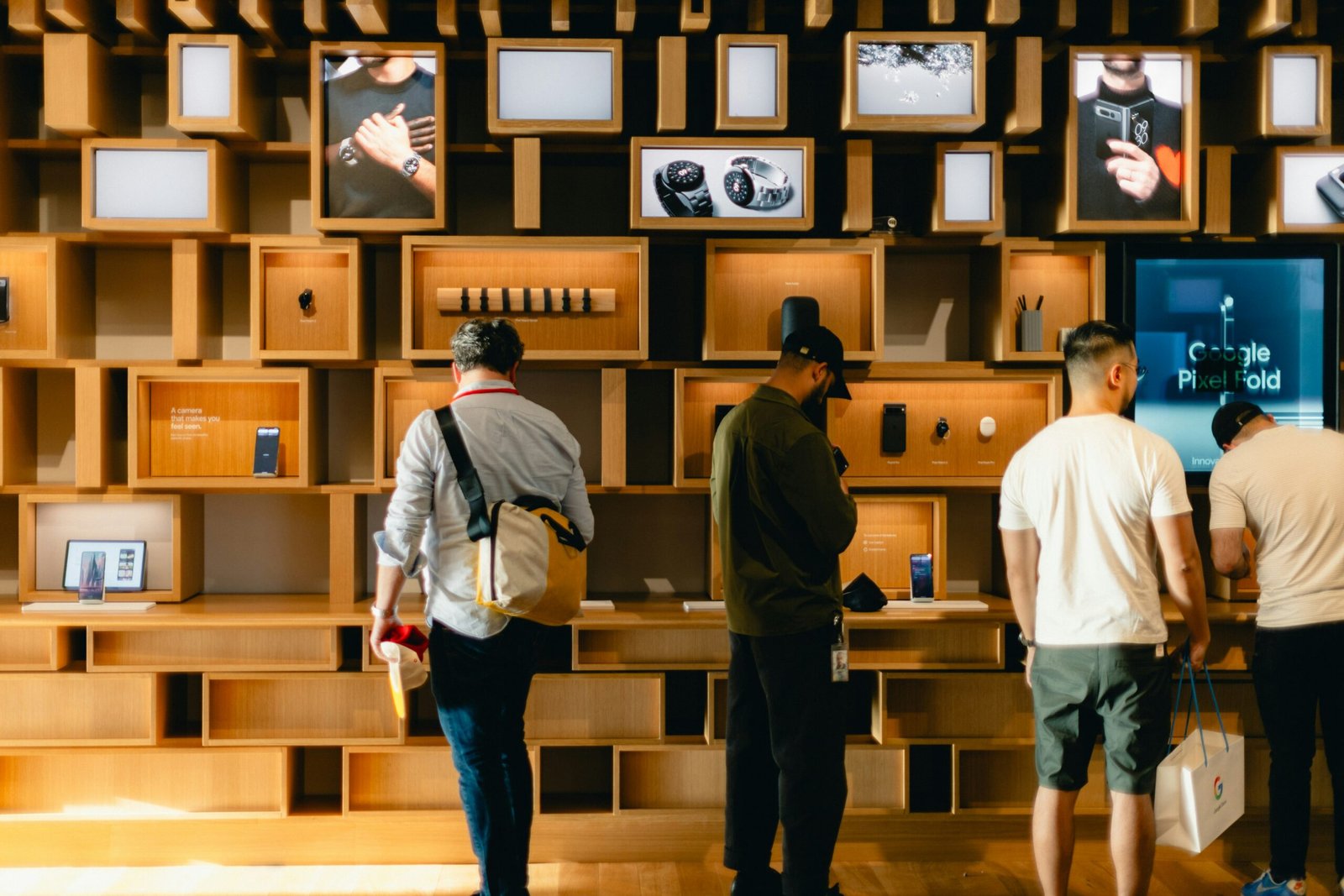
For Indonesian small retail business owners navigating digital transformation where 63% of MSMEs actively use digital tools [63] and the retail market is projected to grow by USD 49.9 billion from 2025-2029 [66], digital signage represents a strategic decision requiring careful evaluation. With the global digital signage market valued at USD 28.8 billion in 2024 and projected to reach USD 45.9 billion by 2030 [51], this technology has evolved from luxury feature to competitive necessity transforming how retailers engage customers and drive sales.
Research reveals businesses report average sales increases of 31.8% after implementing digital signage [55], while 80% of retail brands record up to 33% increase in repeat customers [55]. For Indonesian retailers competing in markets where digital technology transforms consumption patterns and e-commerce brands use AI and visual merchandising to boost sales [66], understanding digital signage ROI determines whether this investment delivers measurable returns justifying upfront costs and ongoing operational expenses.
Understanding Digital Signage: The Modern Retail Communication Tool
Digital signage has evolved dramatically from simple electronic billboards to sophisticated, AI-powered communication platforms delivering dynamic content that responds to customer behavior in real-time.
The Technology Behind Digital Signage—Digital signage encompasses electronic displays showing multimedia content controlled remotely through software platforms [51]. Modern systems include hardware components (LCD/LED/OLED displays, media players, mounting equipment), software platforms (content management systems, scheduling tools, analytics), connectivity infrastructure (internet/network access, cloud integration), and content creation tools (design software, templates, asset libraries). The global digital signage market valued at USD 28.83 billion in 2024 is projected to reach USD 45.94 billion by 2030, growing at 8.1% CAGR [52], demonstrating widespread adoption across industries worldwide. For Indonesian retailers, understanding these components helps evaluate total investment requirements beyond just screen purchasing costs.
Market Growth and Industry Adoption—The retail sector accounts for approximately 21-25% of all digital signage installations [51][55], making it the dominant application driving market growth. Retail commanded 28.6% of United States digital signage market revenue in 2024 [53], while the retail segment dominated the global market in 2024 [52]. This sector leadership reflects digital signage’s proven value in retail environments where visual communication directly impacts purchase decisions. Over 60% of enterprises without digital signage plan to implement it within two years [55], indicating accelerating adoption trends that Indonesian retailers should monitor as competitive dynamics shift toward digitally-enhanced customer experiences.
Why Digital Signage Matters in Indonesian Retail—Indonesia’s digital economy is projected to reach USD 146 billion by 2025 [65], with retail market growth driven by digital technology transformation [66]. Indonesian consumers increasingly expect omnichannel experiences blending online and offline shopping seamlessly [70]. Digital wallets facilitate 40% of online payments [69], demonstrating consumer comfort with digital interfaces that extends to in-store technology expectations. For Indonesian small businesses, digital signage bridges physical retail with digital customer expectations, creating modern shopping experiences that compete effectively against e-commerce platforms where 88% of online retail users are in their 20s and 30s—tech-savvy consumers demanding innovative experiences [69].
The ROI Case: Quantifiable Benefits of Digital Signage
Understanding digital signage ROI requires examining both direct revenue impacts and indirect operational benefits that accumulate over time to justify initial investments.
Direct Sales Impact and Revenue Growth—Businesses report average sales uplift of 31.8% after implementing digital signage [55], representing substantial revenue increases that directly impact bottom-line profitability. 80% of retail brands using digital signage record up to 33% increase in repeat customers [55], demonstrating not just immediate sales growth but sustained customer loyalty improvements. Digital displays capture 400% more views than static displays [55], while 76% of consumers have entered stores because digital signage caught their interest [55]. For Indonesian small retailers, these statistics translate to measurable traffic increases and conversion rate improvements that compound over monthly and annual timeframes, generating cumulative revenue far exceeding initial technology investments.
Customer Engagement and Experience Enhancement—The average dwell time for digital signage is 2.6 times longer than static signage [55], meaning customers spend significantly more time engaging with content and products. 68% of consumers say digital signage would influence their decision to buy advertised products [55], while dynamic content on digital signs achieves 83% recall rate [55] compared to much lower rates for traditional advertising. 81% of customers prefer companies offering personalized experiences [60], which digital signage enables through targeted messaging and real-time content adaptation. For Indonesian retailers, enhanced engagement translates to higher average transaction values, increased impulse purchases, and stronger brand relationships that drive long-term customer lifetime value.
Operational Efficiency and Cost Savings—Digital signage eliminates recurring printing costs for promotional materials, pricing updates, and seasonal campaigns. Content updates occur instantly through software platforms, eliminating staff time spent manually changing signs and reducing errors from outdated information. 84% of viewers feel wait times are 35% faster when given audio-visual content on digital signage [55], improving perceived service quality without additional staffing requirements. For Indonesian small businesses with limited staff, digital signage effectively extends team capacity by automating communication, providing product information, and guiding customer journeys without requiring constant human intervention that diverts employees from other value-adding activities.
Marketing Flexibility and Real-Time Adaptation—Digital signage allows retailers to adapt messaging and promotions in real-time to customer behavior, inventory levels, emerging trends, and market shifts [60]. This flexibility proves invaluable during Indonesian cultural moments like Ramadan, Chinese New Year, and holiday periods when consumer preferences shift rapidly and traditional printed materials become obsolete within days. Retailers can test different messaging approaches, analyze performance data, and optimize content continuously rather than committing to static campaigns for extended periods. AI-powered systems adjust messaging automatically when shoppers approach, with computer-vision modules gauging demographics and triggering creative variants that can lift conversion by up to 30% [58].
Competitive Differentiation and Brand Positioning—In markets where 63% of Indonesian MSMEs use digital tools [63] and digital transformation accelerates across sectors, digital signage signals modern brand positioning that resonates with younger consumers driving 88% of online retail [69]. Physical stores using digital signage differentiate themselves from traditional competitors while creating parity with e-commerce experiences through visual richness and dynamic content. For Indonesian small retailers competing against both local competitors and international chains, professional digital signage creates premium brand perceptions that justify higher prices and attract quality-conscious customers willing to pay for enhanced shopping experiences.
Investment Considerations: Costs and Implementation
Understanding total investment requirements enables Indonesian retailers to budget appropriately and calculate realistic ROI timelines based on comprehensive cost accounting.
Hardware Investment and Equipment Costs—Initial hardware costs vary significantly based on screen size, display technology (LCD/LED/OLED), resolution (HD/4K/8K), and installation complexity. 32-inch to 52-inch panels account for 48.6% of digital signage installations [53], representing the sweet spot balancing visibility with affordability for small retail spaces. Per-square-inch costs for 65-inch commercial panels have fallen below USD 20 [53], making larger displays increasingly accessible. Indonesian retailers should budget for displays, media players, mounting systems, protective enclosures (for outdoor installations), and professional installation labor. Indoor deployments representing 78.9% of revenue in 2024 [53] typically cost less than outdoor installations requiring weatherproofing and higher brightness specifications.
Software Licensing and Content Management—Software represents the fastest-growing segment projected at 10.5% CAGR through 2030 [58], as businesses discover content orchestration and analytics drive ROI. Cloud-based content management systems charge subscription fees ranging from affordable monthly plans for single screens to enterprise platforms managing thousands of displays. Indonesian small businesses should evaluate software based on ease of use, template libraries, scheduling capabilities, multi-screen management, analytics features, and integration with existing systems. Cloud-based solutions eliminate on-premise server requirements, reduce IT complexity, and enable remote management—critical advantages for resource-constrained small businesses lacking dedicated IT staff.
Content Creation and Design Costs—Effective digital signage requires high-quality content designed specifically for screen dimensions, viewing distances, and dwell times. Content costs include initial design creation, ongoing content updates and refreshes, template customization, photography and videography (if producing original content), and potentially professional design services for campaigns requiring polished execution. Indonesian retailers can minimize costs through template-based solutions, user-generated content, and phased implementation starting with simple text-and-image content before graduating to sophisticated video production as budgets allow and teams develop content creation capabilities.
Ongoing Operational Expenses—Beyond initial investment, Indonesian retailers must budget for electricity consumption (modern LED displays are energy-efficient but consume power continuously), internet connectivity fees (for cloud-based systems), software subscription renewals, content updates and refreshes, maintenance and technical support, and potential hardware repairs or replacements over multi-year operational lifecycles. Managed services bundling displays, media players, and maintenance under multi-year subscriptions convert one-time capital expenses into predictable operating expenses [53], easing cash flow management for small businesses preferring distributed costs over large upfront investments.
ROI Calculation Framework—Indonesian retailers should calculate ROI using this framework: (Total Revenue Increase – Total Costs) / Total Costs × 100. Revenue increases include direct sales uplift, increased average transaction values, higher traffic conversion rates, and improved customer retention driving repeat purchases. Costs include all hardware, software, installation, content creation, and ongoing operational expenses over the measurement period (typically one year for initial ROI assessment, extending to multi-year projections for long-term planning). Research shows retailers implementing event-driven inventory systems with digital signage reported average ROI of 287% over three years with payback periods averaging 9.7 months [70], providing benchmarks Indonesian small businesses can reference when projecting their own investment returns.
Strategic Implementation: Best Practices for Indonesian Retailers
Successful digital signage implementation requires strategic planning, phased rollouts, and continuous optimization ensuring investments deliver promised returns.
Start with Strategic Placement—Location determines digital signage effectiveness more than screen size or content quality. Prioritize high-traffic areas (store entrances, checkout queues, main aisles), decision-making points (product categories, fitting rooms, service counters), wait areas (checkout lines, service desks, seating areas), and window displays attracting passersby. Indonesian retailers should map customer journeys identifying touchpoints where digital messages influence behavior, starting with 1-2 strategic screens demonstrating ROI before expanding to comprehensive networks covering entire stores.
Develop Compelling Content Strategy—Content makes or breaks digital signage effectiveness. Best practices include keeping messages simple and focused (average attention span for digital signage content is 8-10 seconds [55]), using high-quality visuals capturing attention, incorporating motion attracting eye movement, aligning content with customer journey stage, rotating content preventing screen blindness, and localizing messaging for Indonesian cultural context. During Ramadan when retail spending increases [66], Indonesian retailers should create culturally-relevant content resonating with Muslim consumers’ values and shopping patterns. Social media integration encouraging customers to share experiences amplifies reach beyond physical visitors.
Leverage Data and Analytics—Modern digital signage platforms provide detailed analytics showing content performance, viewer engagement, and conversion impacts. Indonesian retailers should track impressions (how many people viewed displays), dwell time (how long viewers engaged with content), conversion rates (percentage acting on calls-to-action), sales correlation (revenue changes associated with campaigns), and A/B testing results (comparing different content approaches). These insights enable continuous optimization improving ROI over time as teams learn what resonates with specific customer segments and refine strategies based on empirical evidence rather than assumptions.
Integrate with Broader Marketing Ecosystem—Digital signage delivers maximum value when integrated with other marketing channels and business systems. Connect displays with e-commerce platforms showing online inventory, loyalty programs personalizing offers based on customer data, point-of-sale systems triggering real-time promotions, social media campaigns creating cohesive omnichannel experiences, and email marketing reinforcing in-store messages. Indonesian retailers embracing digital transformation [63] should position digital signage as central component of comprehensive marketing technology stacks creating seamless customer experiences across all touchpoints—physical, digital, and mobile.
Plan for Scalability and Future Growth—Start with modest implementations proving ROI before expanding to larger deployments. Choose technology platforms supporting scalability from single screens to multi-location networks without requiring complete system replacements. Cloud-based solutions enable centralized management of distributed displays, crucial for Indonesian retailers planning expansion across multiple cities or regions. As AI adoption in Indonesia is expected to increase 30% by 2025 [68], Indonesian retailers should select digital signage platforms supporting AI integration enabling future capabilities like facial recognition, personalized content delivery, and automated optimization as these technologies become more accessible and affordable.
Addressing Common Concerns and Barriers
Understanding typical barriers helps Indonesian small business owners evaluate whether digital signage suits their specific circumstances and capabilities.
Budget Constraints and Affordability—While professional installations can be expensive, entry-level digital signage has become increasingly affordable with consumer-grade displays, free or low-cost software platforms, and DIY installation reducing barriers. Indonesian small businesses can start with single screens costing under USD 1,000 including hardware and basic software, proving value before committing to larger investments. Leasing options and managed service subscriptions spread costs over time matching cash flow patterns better than large upfront capital expenditures.
Technical Complexity and IT Requirements—Cloud-based platforms have dramatically simplified digital signage management eliminating requirements for on-premise servers or dedicated IT staff. Modern systems feature intuitive interfaces enabling non-technical users to create and schedule content through drag-and-drop editors and pre-designed templates. Indonesian retailers lacking technical expertise can rely on vendor support, third-party managed services, or freelance designers creating content affordably through platforms popular in Indonesian digital economy [65].
Content Creation Challenges—Creating compelling content consistently challenges small retailers lacking design skills or resources. Solutions include template libraries provided by software vendors, stock imagery and video repositories, user-generated content from customers, simple text-and-image approaches requiring minimal design skills, and outsourcing to freelance designers or agencies for periodic professional campaigns. As Indonesia’s digital talent pool grows with government training programs [68], affordable content creation services become increasingly accessible to small businesses.
Measuring Effectiveness and ROI—Many retailers struggle quantifying digital signage impact isolating it from other marketing activities. Best practices include establishing baseline metrics before implementation, tracking sales data during specific campaigns, conducting customer surveys measuring awareness and influence, using unique promotional codes displayed only on digital signage, and implementing foot traffic analytics correlating viewer numbers with conversion rates. Indonesian retailers should set clear success criteria before deployment enabling objective ROI assessment rather than subjective impressions about effectiveness.
Keeping Content Fresh and Relevant—Static content loses effectiveness as viewers become habituated ignoring screens showing repetitive messages. Indonesian retailers should schedule regular content rotations (weekly or bi-weekly minimums), align updates with promotional calendars and seasonal events, incorporate real-time elements (news feeds, social media, weather-triggered content), and test different approaches continuously refining what resonates with specific customer demographics. The investment in ongoing content development pays dividends through sustained engagement preventing digital signage from becoming ignored background fixtures.
Indonesian Market Opportunities and Considerations
Indonesia’s unique market dynamics create specific opportunities and requirements for digital signage implementation success.
Growing Digital Economy and Consumer Expectations—Indonesia’s digital economy projected at USD 146 billion by 2025 [61][65] reflects rapid consumer adoption of digital technologies creating expectations for modern retail experiences. With 220 million internet users [62][65] and 95% using smartphones as primary devices [65], Indonesian consumers are digitally savvy expecting seamless technology integration across shopping channels. Retailers deploying digital signage meet these expectations while positioning themselves as modern brands appealing to younger demographics driving 88% of online retail usage [69].
Government Support and Digital Transformation Initiatives—Indonesia’s National Strategy for Digital Economy Development 2023-2030 [61] includes initiatives promoting smart retailer stores using immersive technologies like augmented reality, smart warehouses, and innovative customer experiences [67]. Government programs like “UMKM Go Digital” help small businesses learn and adopt online technologies [63], creating supportive ecosystem for digital signage adoption as part of broader digital transformation strategies. Indonesian retailers can leverage these programs for training, funding access, and partnerships accelerating technology implementation.
Infrastructure Development and Smart City Initiatives—The “100 Smart Cities” initiative and investments in digital infrastructure [61] improve connectivity enabling cloud-based digital signage management even in secondary cities. 5G development and data center construction [61] enhance network reliability supporting real-time content delivery and advanced features like AI-powered personalization. Indonesian retailers in cities prioritizing smart infrastructure benefit from improved technology foundations reducing implementation barriers and operational challenges.
Local Content and Cultural Relevance—Indonesian retailers must customize digital signage content reflecting local cultural values, language preferences, and seasonal patterns. Ramadan period sees increased retail spending [66] requiring culturally-appropriate messaging and promotions. Regional diversity across Indonesian archipelago necessitates localized approaches rather than one-size-fits-all strategies—what works in Jakarta may not resonate in Yogyakarta or Makassar. Digital signage’s flexibility enables this localization cost-effectively compared to printing regional variations of static signage requiring separate production runs for each market.
Competitive Landscape and Differentiation—As 63% of Indonesian MSMEs adopt digital tools [63] and modern retail formats gain popularity [66], digital signage becomes competitive necessity rather than luxury differentiator. E-commerce platforms setting digital experience standards force physical retailers to enhance in-store environments matching online convenience and personalization [70]. Indonesian small businesses using digital signage effectively create hybrid experiences combining physical product interaction with digital information access and personalized recommendations—competitive advantages e-commerce cannot easily replicate.
Partner with MD Asia for Digital Signage Success
Implementing digital signage successfully requires expertise in technology selection, content strategy, installation management, and ongoing optimization—capabilities Indonesian small businesses understandably lack while managing daily operations and core business functions. Professional support can dramatically improve outcomes while ensuring investments deliver measurable returns justifying digital signage adoption.
MD Asia understands the unique challenges facing Indonesian small retail businesses seeking to leverage digital signage for customer engagement and sales growth. As an integrated marketing company delivering end-to-end solutions across digital, creative, and offline advertising production, we help retailers develop and implement comprehensive digital signage strategies that attract customer attention, communicate value propositions effectively, drive purchasing decisions, and measure results with precision enabling continuous improvement. Our team combines deep understanding of Indonesian consumer behavior and retail dynamics with proven digital signage methodologies ensuring every screen delivers maximum impact relative to investment.
Whether you need strategic planning and technology selection matching business objectives and budgets, professional content creation and design services producing compelling visual communications, installation and technical implementation ensuring reliable operation, ongoing content management and optimization maximizing engagement and ROI, or comprehensive analytics and reporting proving value to stakeholders, MD Asia provides the expertise and support transforming digital signage from technology purchase into strategic business tool. We work with businesses of all sizes, understanding that Indonesian small retailers need cost-effective solutions delivering measurable impact without requiring massive upfront investments or dedicated technical staff.
Ready to explore whether digital signage delivers profitable returns for your retail business? Contact MD Asia today to discover how professional digital signage services can increase foot traffic and store visits, improve customer engagement and dwell time, boost sales conversion and average transaction values, enhance brand positioning and competitive differentiation, and provide clear ROI measurement proving investment value. Let us help you create digital signage strategies that transform customer experiences while delivering measurable business results positioning your brand for sustained growth in Indonesia’s evolving retail landscape.
Conclusion: Strategic Investment for Modern Retail
In Indonesia’s rapidly digitalizing retail environment where technology transforms consumption patterns and consumer expectations rise continuously, digital signage represents strategic investment rather than discretionary expense for retailers committed to long-term competitiveness. The evidence compels attention: 31.8% average sales increases [55], 80% of brands reporting 33% gains in repeat customers [55], 400% more views than static displays [55], and global market growth from USD 28.8 billion to USD 45.9 billion [51] demonstrating worldwide adoption by retailers recognizing digital signage’s proven value.
For Indonesian small retail businesses, digital signage profitability depends on strategic implementation aligned with business objectives, customer needs, and operational capabilities. Not every retailer benefits equally—success requires compelling content, strategic placement, continuous optimization, and integration with broader marketing ecosystems. However, retailers investing thoughtfully in digital signage technology and committing to ongoing content development typically achieve positive ROI within 9-12 months [70], with returns accelerating as teams develop expertise and optimization strategies mature.
Indonesia’s digital economy reaching USD 146 billion by 2025 [65], 63% of MSMEs adopting digital tools [63], and government initiatives supporting smart retailer stores [67] create ideal conditions for digital signage success. The question for Indonesian small business owners isn’t whether digital signage works—evidence confirms effectiveness across global retail markets—but rather whether specific implementations align with your customer demographics, retail format, budget constraints, and content creation capabilities. Start with strategic assessments identifying highest-value applications, implement modestly proving ROI before expanding, and continuously optimize based on performance data. When approached strategically with realistic expectations and professional support, digital signage transforms from technology expense into profitable investment driving measurable business growth and competitive advantages in Indonesia’s dynamic retail landscape.
👉 Contact us today and start creating a store display that truly stands out.
References
[51] AIScreen. (2025, October 31). 100 Digital Signage Statistics 2025 – Latest & Trending. Retrieved from https://www.aiscreen.io/digital-signage/digital-signage-statistics-2025/
[52] Grand View Research. (n.d.). Digital Signage Market Size & Share | Industry Report, 2030. Retrieved from https://www.grandviewresearch.com/industry-analysis/digital-signage-market
[53] Mordor Intelligence. (2025, June 11). Digital Signage Market in the US – Size, Share & Companies 2025 – 2030. Retrieved from https://www.mordorintelligence.com/industry-reports/united-states-digital-signage-market
[54] SeenLabs. (n.d.). Digital Signage Statistics 2025: 50+ Industry Data Points. Retrieved from https://resources.seenlabs.com/digital-signage-statistics-2025
[55] Fugo. (2025, February 19). Digital Signage Statistics in 2025 (Trends, Numbers, & More). Retrieved from https://www.fugo.ai/blog/https-www-fugo-ai-blog-digital-signage-statistics/
[58] Mordor Intelligence. (2025, August 18). Digital Signage Market Size, Share & Forecast Report, 2025-2034. Retrieved from https://www.mordorintelligence.com/industry-reports/digital-signage-market-industry
[60] Samsung Business Insights. (2025, March 4). The ROI of retail digital signage and media solutions for small businesses. Retrieved from https://insights.samsung.com/2025/03/04/the-roi-of-retail-digital-signage-and-media-solutions-for-small-businesses/
[61] Trade.gov. (n.d.). Indonesia Digital Economy. Retrieved from https://www.trade.gov/country-commercial-guides/indonesia-digital-economy
[62] Sellercraft. (n.d.). Indonesia Digital Retail Outlook 2025–2026. Retrieved from https://sellercraft.co/indonesia-digital-retail-outlook-2025-2026/
[63] Market Research Indonesia. (2025, October 7). Indonesia Digital SME Adoption Is Accelerating. Retrieved from https://marketresearchindonesia.com/insights/articles/indonesia-digital-sme-adoption-is-accelerating
[65] Kompas. (n.d.). Examining Indonesia’s Digital Economy Landscape in 2025. Retrieved from https://www.kompas.id/artikel/en-mencermati-landskap-ekonomi-digital-indonesia-2025-dan-prospeknya-pada-2026
[66] PR Newswire. (2025, February 5). Retail Market in Indonesia to Grow by USD 49.9 Billion from 2025-2029. Retrieved from https://www.prnewswire.com/news-releases/retail-market-in-indonesia-to-grow-by-usd-49-9-billion-from-2025-2029–driven-by-expansion-of-retail-landscape-report-on-ais-role-in-market-transformation—technavio-302366169.html
[67] HBT Law. (2025, March 28). Indonesia’s white paper on digital transformation. Retrieved from https://www.hbtlaw.com/insights/2025-03/indonesias-white-paper-digital-transformation
[68] Trade.gov. (n.d.). Indonesia Digital Transformation. Retrieved from https://www.trade.gov/market-intelligence/indonesia-digital-transformation
[69] Market Research Indonesia. (2025, April 25). Inside Indonesia Retail Market Insights 2025 Shift. Retrieved from https://marketresearchindonesia.com/insights/articles/indonesia-retail-market-insights-2025-shift
[70] ResearchGate. (2025, January 15). Revolutionizing Retail: How Technology Innovation Drives Customer Experience in Indonesia. Retrieved from https://www.researchgate.net/publication/388046882_Revolutionizing_Retail_How_Technology_Innovation_Drives_Customer_Experience_and_Market_Adaptability_in_Indonesia