
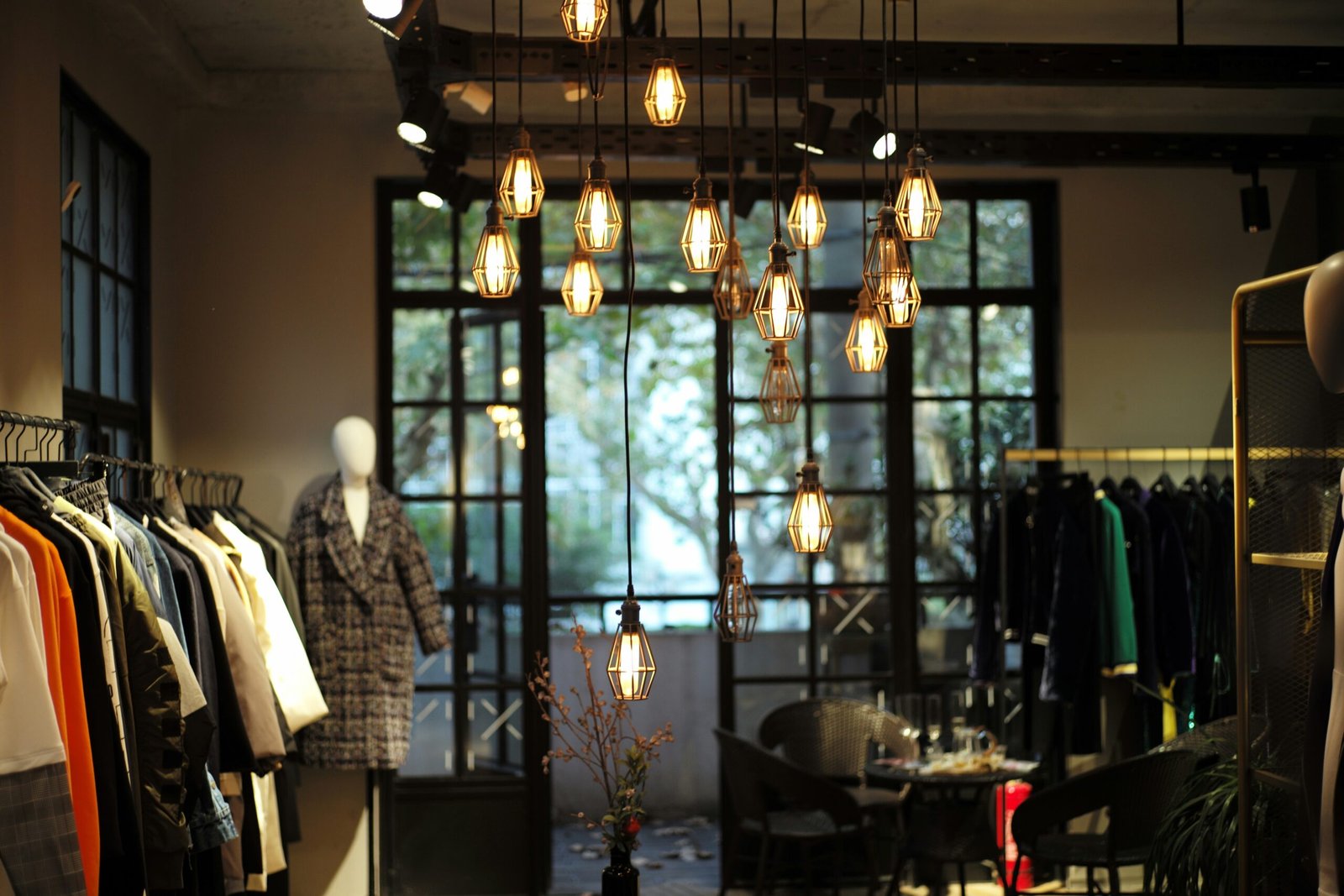
Walk into any successful retail store and you’ll immediately feel the difference—products seem to glow, displays draw your eye naturally, and the entire space feels inviting. This isn’t magic; it’s the result of strategic lighting design. For Indonesian retailers competing against e-commerce and neighboring stores, professional lighting strategies can mean the difference between browsers and buyers.
Research shows that effective retail lighting can increase sales by up to 40%, with grocery stores that converted to LED lighting experiencing a 19% sales boost [1]. Your lighting doesn’t just illuminate products—it influences customer behavior, creates emotional connections, and ultimately drives purchasing decisions. Let’s explore the proven lighting strategies that transform ordinary retail spaces into sales-generating environments.
Understanding the Four-Layer Lighting Approach
Professional retail lighting design works like a symphony, combining four distinct layers that work together to create depth, guide attention, and enhance the shopping experience [2]. Each layer serves a specific purpose, and understanding how they interact allows Indonesian retailers to maximize their lighting investment while creating spaces that convert foot traffic into sales.
The four-layer approach—ambient, task, accent, and decorative lighting—creates dimension that guides customers through your store naturally [2]. This layered strategy replaces the outdated approach of uniform, flat lighting that fails to highlight products or create visual interest. By strategically combining these layers, even small retailers with limited budgets can create professional-looking spaces that compete with larger stores. Studies show that customers select twice as many items from shelves with integrated lighting compared to unlit shelving [3], demonstrating the direct sales impact of proper lighting implementation.
For Indonesian retailers, this layered approach offers particular advantages during cultural celebrations when visual merchandising becomes crucial. During Ramadan, Chinese New Year, or Independence Day, adjusting your lighting layers allows you to emphasize seasonal displays without completely redesigning your entire system. The flexibility of layered lighting supports the dynamic retail calendar that characterizes Indonesian markets, where timely response to cultural moments often determines seasonal success.
Ambient Lighting: Creating the Foundation
Ambient lighting provides the base illumination throughout your store, setting the overall mood and allowing customers to navigate comfortably [4]. This foundational layer establishes your brand atmosphere—whether that’s energetic and modern or warm and traditional. For general circulation and ambient lighting in retail spaces, a target illumination of 20-40 footcandles on the floor is appropriate [1], ensuring customers can move safely while maintaining a comfortable atmosphere that encourages browsing.
The color temperature of your ambient lighting significantly affects customer perception and behavior. Warm lighting (2700-3000K) creates inviting, comfortable atmospheres ideal for fashion boutiques, home goods stores, and restaurants, encouraging customers to linger longer [5]. Cool lighting (4000-5000K) evokes cleanliness and modernity, perfect for electronics retailers, pharmacies, and convenience stores where clarity and energy are desired [5]. Most retail applications benefit from neutral lighting between 3000-3500K, providing balanced illumination that works well for diverse merchandise [2].
Indonesian retailers should consider their local climate and architecture when designing ambient lighting. Stores with significant natural light during daytime hours can reduce ambient artificial lighting, saving energy costs while creating pleasant shopping environments. However, evening ambient lighting becomes critical as many Indonesian shopping areas experience heavy foot traffic after sunset, particularly during Ramadan when shopping peaks after iftar. Modern LED panel lights and strategically placed downlights offer energy-efficient solutions that provide consistent ambient illumination throughout operating hours.
Don’t make the common mistake of over-illuminating your entire space uniformly. Contrast ratios between ambient and accent lighting create visual interest—a 3:1 ratio creates noticeable emphasis, while 5:1 delivers maximum impact [2]. This means your ambient lighting should be bright enough for comfort and safety but deliberately dimmer than your accent lighting, allowing focal points to naturally draw customer attention to key products and promotional displays.
Task Lighting: Illuminating Functional Areas
Task lighting targets specific areas where customers or staff perform detailed activities, delivering direct illumination at 50-200 footcandles [2]. This creates a 3:1 ratio of task lighting to general illumination, helping customers read price tags, examine product quality, and make informed purchasing decisions. Key task lighting locations include checkout counters, customer service desks, fitting rooms, product demonstration zones, and any area where detailed product inspection occurs.
Fitting room lighting deserves special attention as it directly impacts conversion rates. Purchase likelihood jumps from 10% to 67% when customers like their appearance in fitting room mirrors [2]. Soft, diffused lighting at proper brightness levels and warm color temperatures flatters customers, encouraging them to complete purchases. Indonesian fashion retailers should prioritize fitting room lighting as a critical investment, recognizing that poorly lit fitting rooms actively discourage sales even when customers love products on display racks.
For food retailers, task lighting in fresh produce, meat, and bakery sections significantly influences perceived freshness and quality. Research shows that grocery stores using high-quality LED lighting experienced increased sales attributed to improvements in perceived freshness and product attractiveness [6]. Indonesian supermarkets and traditional markets modernizing their spaces should prioritize task lighting in food sections, using appropriate color temperatures that enhance natural food colors rather than distorting them.
Electronics retailers benefit from task lighting at product demonstration tables where customers test smartphones, laptops, and other devices. Adequate lighting in these areas reduces eye strain and allows customers to properly evaluate screen quality, camera performance, and product features. Pendant lighting, adjustable desk lamps, or focused track lighting provides effective task illumination without creating glare on screens, balancing visibility with comfortable product evaluation experiences.
Accent Lighting: Creating Focal Points That Drive Sales
Accent lighting guides customer focus to specific merchandise through concentrated light beams, typically using a 5:1 ratio of accent lighting to ambient light to effectively highlight products [2]. Track lighting, spotlights, adjustable recessed lights, and LED strip lights excel at creating these focal points, drawing attention to new arrivals, promotional items, bestselling products, or seasonal displays that drive your current sales strategy.
The psychology behind accent lighting is powerful—humans are naturally phototropic, meaning our eyes automatically follow light [1]. By strategically placing brighter accent lighting on products you want to sell, you leverage this biological response to guide customer attention exactly where it benefits your business most. Featured merchandise can stand out dramatically with contrast ratios up to 30:1 [2], creating unmissable focal points that capture attention even from customers initially browsing other sections.
Indonesian retailers can use accent lighting to emphasize cultural celebrations and seasonal themes. During Chinese New Year, accent lighting on gold and red decorative items creates festive atmospheres while highlighting gift-appropriate products. Ramadan displays featuring prayer items, traditional clothing, and gift sets benefit from warm accent lighting that creates reverence and importance. Independence Day merchandise, back-to-school sections, and other culturally significant product groups become more prominent and appealing through strategic accent lighting placement.
For small retailers with limited budgets, even simple LED spotlights or track lighting systems available at Indonesian electronics markets create significant impact. Focus accent lighting on your highest-margin products, new inventory you want to move quickly, or items that look particularly attractive under enhanced illumination. Jewelry stores use accent lighting to create sparkle and dimension; fashion retailers highlight featured outfits; and electronics stores draw attention to flagship products through carefully aimed spotlights that make screens and finishes more appealing.
The Critical Role of Color Rendering Index (CRI)
Color Rendering Index measures how accurately a light source reveals true colors compared to natural sunlight, rated on a 0-100 scale [7]. For retail applications, CRI becomes critically important because customers make purchasing decisions based on how products appear in your store—and disappointment when products look different at home directly damages your reputation and increases returns. Retailers should use lighting with CRI values of 90+ to present products naturally and make colors vibrant and enticing [2].
Research shows that high-CRI lighting directly supports retail revenue by improving color fidelity, product appeal, and shopper confidence, with typical sales increases of 2-5% in categories where color dominates decision-making like apparel, cosmetics, and fresh food [8]. When combined with proper color temperature and visual merchandising, CRI improvements can drive sales lifts of 5-10% [8]. For Indonesian fashion retailers, cosmetics stores, and food businesses, investing in high-CRI lighting pays immediate dividends through increased conversion rates and reduced returns from color mismatch disappointment.
Different product categories benefit from specific CRI considerations. Fashion retailers need 90+ CRI to ensure clothing colors match how they were designed, allowing customers to coordinate outfits confidently. Cosmetics stores require high CRI so customers can accurately match foundation shades and lipstick colors to their skin tones. Fresh food retailers—from modern supermarkets to modernizing traditional markets—benefit from high CRI that makes produce appear fresh, meat look appetizing, and bakery items seem just-baked. Even hardware stores improve customer satisfaction when high CRI allows accurate color matching for paint, tiles, and building materials.
When specifying lighting, Indonesian retailers should demand actual CRI test reports rather than accepting marketing claims [8]. LED products have made 90+ CRI achievable at reasonable costs with excellent energy efficiency, but quality varies significantly between manufacturers. Look for products with proper certifications and specifications listing both CRI and R9 values—the R9 score measures red color rendering specifically, which is crucial for skin tones, food, and many textiles. High-quality retail LED lighting should offer 90+ CRI, strong R9 scores, and consistent color temperature across all fixtures.
Energy-Efficient LED Solutions for Indonesian Retailers
LED lighting technology has revolutionized retail lighting by combining superior performance with dramatic energy savings. LED bulbs reduce electricity costs by up to 75% compared to traditional incandescent bulbs while lasting significantly longer [9], making them ideal for retail displays that need to remain lit during all operating hours. For Indonesian retailers facing energy costs and environmental concerns, LED technology offers immediate operational savings that justify initial investment through monthly utility bill reductions.
Beyond energy savings, modern LED fixtures provide precise control over color temperature, dimming levels, and even dynamic lighting effects throughout the day. Smart LED systems allow Indonesian retailers to adjust lighting intensity based on natural daylight levels, saving energy during bright afternoons while ensuring adequate illumination during evening shopping periods. Programmable LED lighting can automatically adjust for different times of day or special events, creating appropriate atmospheres for morning browsing, afternoon shopping, or evening promotions without manual intervention.
Indonesian electronics markets from Glodok in Jakarta to local suppliers in regional cities now stock quality LED options at increasingly affordable prices. When selecting LED products, prioritize those with proper certifications, clear specifications, and warranty coverage. Initial investment in quality LED fixtures pays off through longevity, consistent performance, and reliable energy savings, while cheap LED products often disappoint through poor color rendering, premature failure, or inconsistent light output that damages rather than enhances product appeal.
Consider LED strip lights as budget-friendly accent lighting solutions that Indonesian retailers can install themselves. LED strips placed under shelving, behind signage, or along display edges create modern, professional effects at minimal cost. Battery-powered LED spotlights offer flexibility for temporary displays, seasonal sections, or rental spaces where permanent electrical installation isn’t feasible. The versatility and affordability of LED technology democratizes professional lighting, allowing even the smallest Indonesian retailers to compete visually with larger stores through strategic lighting investments.
Smart Lighting Strategies for Different Retail Categories
Different retail categories benefit from tailored lighting approaches that enhance their specific product characteristics and customer needs [5]. Fashion boutiques typically use warm ambient lighting (2700-3000K) with focused accent lighting on featured outfits, creating intimate atmospheres that encourage trying on clothes. Fitting room lighting should be warm and flattering, avoiding harsh overhead lights that cast unflattering shadows. Display windows use dramatic accent lighting to create street-level appeal that drives foot traffic into stores.
Electronics and appliance retailers benefit from cooler, brighter lighting (4000-5000K) that creates modern, energetic atmospheres while providing adequate illumination for customers to evaluate screen quality and product features [5]. Task lighting at demonstration tables allows proper product testing, while accent lighting draws attention to flagship products and promotional items. Adequate general illumination throughout electronics stores helps customers navigate and compare options without eye strain from constantly adjusting to different light levels.
Food retailers—from modern supermarkets to traditional market stalls modernizing their operations—should prioritize lighting that enhances perceived freshness and appetizing appeal. High-CRI lighting in produce sections makes fruits and vegetables appear vibrant and fresh, while appropriate color temperatures in meat sections enhance natural colors without distortion. Bakery lighting should create warm, inviting atmospheres that make fresh bread and pastries irresistible, using lighting that emphasizes golden-brown crusts and appealing textures.
Home goods and furniture retailers benefit from warm, residential-feeling ambient lighting that helps customers envision products in their own homes. Layered lighting demonstrates how lamps, fixtures, and other products perform in realistic settings, while accent lighting highlights textures, finishes, and craftsmanship details. Creating room-like vignettes with appropriate lighting helps customers understand how products will look and function in their living spaces, reducing uncertainty and encouraging larger purchases.
Avoiding Common Retail Lighting Mistakes
Many Indonesian retailers inadvertently reduce sales through lighting mistakes that discourage customers or fail to showcase products effectively. Over-illuminating uniformly creates flat, uninviting spaces that lack visual interest and fail to guide customer attention [1]. Instead of making stores more appealing, excessive uniform brightness causes eye fatigue and makes everything blend together, preventing featured products from standing out. Remember that contrast creates interest—strategic dimming of less important areas makes accent-lit focal points more effective.
Glare from improperly aimed or shielded lights creates customer discomfort and reduces visibility [2]. Glare occurs when excessive light shines directly into customer eyes, making it difficult to see products clearly and creating unpleasant shopping experiences. Avoid glare by using proper shielding on fixtures, selecting appropriate beam angles, and ensuring accent lights point at products rather than toward customer viewing positions. Display case lighting should angle toward products but away from where customers stand, preventing reflective glare while maintaining product illumination.
Inconsistent color temperatures throughout a store creates disjointed, unprofessional appearances that confuse rather than guide customers. Mixing warm and cool lighting randomly distracts from merchandise and suggests poor attention to detail [1]. Maintain consistent color temperature within each store zone, transitioning deliberately between areas only when creating distinct department identities. For example, a department store might use slightly warmer lighting in home goods sections and cooler lighting in electronics, but each department maintains internal consistency.
Neglecting regular maintenance allows failed bulbs, dirty fixtures, and inconsistent illumination to damage your store’s appearance and sales performance. Establish maintenance schedules that replace bulbs before they fail, clean fixtures regularly to maintain light output, and check for uneven illumination that creates dark corners or overly bright spots. Well-maintained lighting systems preserve the professional appearance that attracted customers initially, while deteriorating lighting suggests declining quality that extends to merchandise perception.
Implementing Your Lighting Strategy on a Budget
Indonesian retailers working with limited budgets should prioritize lighting investments strategically rather than attempting complete renovations immediately. Begin with accent lighting on your highest-margin or fastest-moving products—even a few well-placed spotlights create noticeable improvements in sales performance [3]. Once these initial investments prove their value through increased conversions, reinvest profits into expanding your lighting system gradually. This incremental approach manages cash flow while building lighting infrastructure that pays for itself through sales improvements.
Consider partnering with local lighting suppliers who offer installation services or advice as part of their sales. Many Indonesian electrical suppliers provide free or low-cost consultations to secure equipment purchases, offering valuable expertise that helps you avoid expensive mistakes. Ask about demonstration programs where suppliers temporarily install lighting to prove performance before you commit to purchases—seeing actual results in your space with your products removes uncertainty about whether lighting improvements will genuinely increase sales.
Take advantage of the significant energy savings LED technology provides to justify lighting investments. Calculate monthly energy cost reductions from LED upgrades and compare these to financing costs if purchasing on credit. In many cases, monthly energy savings exceed monthly payment amounts, meaning LED investments pay for themselves immediately while providing sales-increasing benefits. This positive cash flow makes lighting upgrades financially accessible even for budget-conscious retailers.
Start with the most impactful areas—window displays, checkout areas, and featured product displays typically deliver highest returns on lighting investments. Window displays drive foot traffic, making them critical for capturing passerby attention in competitive retail areas. Checkout area lighting affects final purchase decisions and creates positive last impressions. Featured product displays benefit from accent lighting that drives sales of specific items you’re promoting. Master these high-impact areas before expanding lighting improvements to your entire store.
Bringing Professional Lighting to Your Indonesian Retail Space
Implementing effective retail lighting requires understanding your specific space, merchandise, and customer behavior patterns. Audit your current lighting by observing customer movement patterns, noting which displays attract attention and which are ignored, and asking customers about their shopping experience. Dark corners, glare problems, and products that look unappealing under current lighting identify priorities for improvement. Take photos during different times of day to understand how natural light affects your space and when artificial lighting becomes critical.
Consider how Indonesian shopping patterns affect lighting needs—evening shopping peaks require reliable artificial lighting, while stores in covered markets or shopping centers with limited natural light need different approaches than street-level shops with large windows. Ramadan shopping surges after iftar, Independence Day promotions, and Chinese New Year preparations all create periods where effective lighting becomes especially important for capitalizing on increased customer traffic. Plan lighting upgrades before these high-traffic periods to maximize return on investment.
Test lighting changes in small sections before full implementation, allowing you to refine approaches based on actual results. Simple A/B testing—comparing sales in lit versus unlit displays—provides concrete evidence of lighting effectiveness that guides larger investments. Indonesian retailers often find that even modest lighting improvements create measurable sales increases that justify expanded investment, turning initial skepticism into enthusiasm as results prove the business case for professional lighting.
MD Asia understands that retail lighting represents a strategic investment in your business success, not merely an operational expense. Our integrated marketing solutions include professional retail lighting design and implementation services that help Indonesian retailers create sales-generating environments. From initial lighting audits through fixture selection, installation coordination, and ongoing optimization, our team combines technical lighting expertise with deep understanding of Indonesian retail markets and consumer behavior. We help you create lighting strategies that enhance your products, guide customer behavior, and ultimately drive the sales growth your business deserves.
👉 Contact us today and start creating a store display that truly stands out.
References
- Alcon Lighting. “Retail Lighting Best Practices: Seven Ways to Optimize a Store’s Lighting Design Plan.” June 21, 2024. https://www.alconlighting.com/blog/lighting-design/best-retail-lighting-application-lighting-practices/
- Dominion Lighting. “How Smart Retail Lighting Design Boosts Store Sales [Expert Guide 2025].” August 23, 2025. https://dominionlighting.com/retail-lighting-design/
- Lighting for Impact. “5 Reasons to Illuminate Retail Displays.” June 27, 2024. https://lightingforimpact.com/why-retail-display-lighting/
- Shopify. “Retail Lighting.” https://www.shopify.com/retail/retail-lighting
- Action Services Group. “Retail Lighting Tips for 2024.” May 2, 2024. https://actionservicesgroup.com/blog/retail-lighting-tips-for-2024/
- Pacific Energy Concepts. “8 Ways That Lighting Impacts Retail Spaces.” https://www.pecnw.com/blog/8-ways-that-lighting-impacts-retail-spaces/
- Alcon Lighting. “What is CRI? The Meaning of Color Rendering Index in Lighting.” March 2, 2023. https://www.alconlighting.com/blog/lighting-design/color-rendering-index-cri/
- Hyperlite. “Boost Retail Sales with High CRI Lighting.” https://hi-hyperlite.com/blogs/comprehensive-guides/high-cri-lighting-boosts-retail-sales
- GM Insights. “LED Lamp Market Size & Share Report, 2024 – 2032.” August 1, 2024. https://www.gminsights.com/industry-analysis/led-lamp-market
- LightUp. “Color Temperature and CRI in Commercial Lighting.” December 18, 2024. https://www.lightup.com/blogs/shine-bright-led-solutions-for-businesses/the-importance-of-color-temperature-and-cri-in-commercial-lighting
- TCP Lighting. “High End Retail Store Lighting.” April 12, 2024. https://www.tcpi.com/high-end-retail-store-lighting/
- VM and Display Show. “The Impact of Lighting on Retail Displays.” August 2, 2024. https://www.vmanddisplayshow.com/single-post/the-impact-of-lighting-on-retail-displays
- EYTON Lighting. “CRI Explained: How Color Rendering Index Impacts Lighting Quality.” April 7, 2025. https://eytonlighting.com/cri-explained-how-color-rendering-index-impacts-lighting-quality/